
When the Mirror Line Meets the Collar
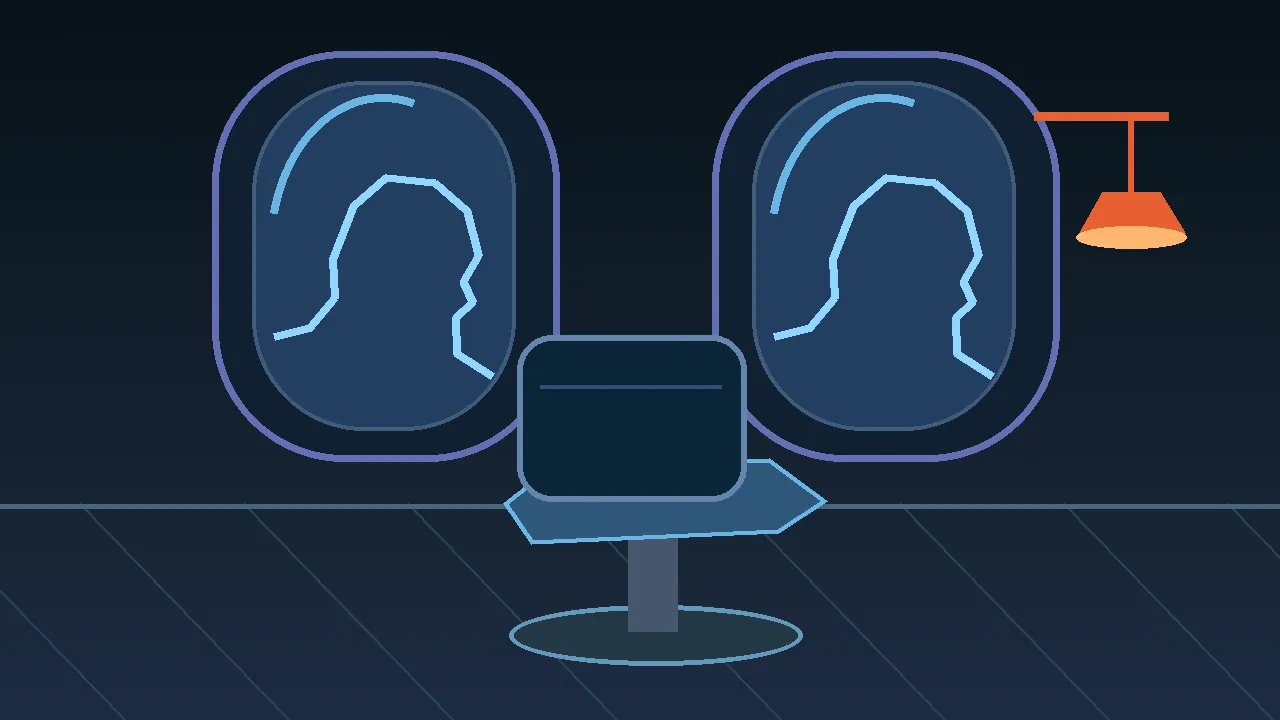
At the first mirror the customer can see a line going down from their cheek to the edge of the collar. The barber sees the profile from farther back. A small change can move the line closer to that edge without altering the rest of the drawing. When we started working on the second mirror, the collar was almost out of view. It became hard to tell how far the proposed line moved.
The Line in the Second Mirror gives the player a simple turn between views. The player can inspect a proposed change and keep a reading of the first profile. The second mirror should show part of the same profile, with enough of the earlier context to identify the line they were comparing. We put the collar back into the frame to give those two pictures a common reference.
Hold the point where the drawing changed
We began by placing a mark at the end of the earlier line. A new one could sit a little farther from the collar. A character has a preference about which line they want to see, and the game can preserve it during a comparison. A reader looking at a close crop should still be able to tell which of the two possible lines is displayed.
In one test, a change of viewpoint made the later line appear to be on a different side of the head. The mark helped locate it in the first view. It became difficult to recognize in the other. We moved the marker beside the visible edge of the collar rather than into a fixed corner of the screen. The collar leaves enough room to attach a smaller caption below it. The new crop can show both reference points when the mirror turns.
Give the customer time to find the same feature
The first response can be a short observation about the line. A player who selects another proposal can see that observation in the history, beside the picture it described. The next response is a different entry. It does not move the earlier marker onto whatever line is now shown. This makes it possible to ask the customer to look again while keeping their intended feature visible.
We compare the sequence on a narrow screen from a fixed view. Open the profile, look for the collar and return to the previous proposal. If the label for the current view moves below a longer note or another image, the player might see the wrong explanation first. The two labels should remain beside their versions.
Compare a feature above the mirror line
In Keep the Turn at the Crown, the player looks for a shape higher in the same kind of scene. A collar may still indicate which direction the person is facing. It does less work than the mirror frame and the crown mark when a reader is checking that upper turn. Both cases need a feature that can be found from two points, with an earlier shape kept available for the comparison.
Turn to the Style Folio to check the two starting views. Identify which part of the chair or collar remains visible before opening a changed picture. A short playtest can ask a reader to point to the earlier frame and name the part that stayed. If they can follow the new line but lose the requested detail, the next drawing needs a steadier landmark. If the detail remains available, then a later revision can change the length while preserving which part the customer meant. The aim is a quiet confirmation that the player can see from both sides of the glass.