
Keep the Turn at the Crown
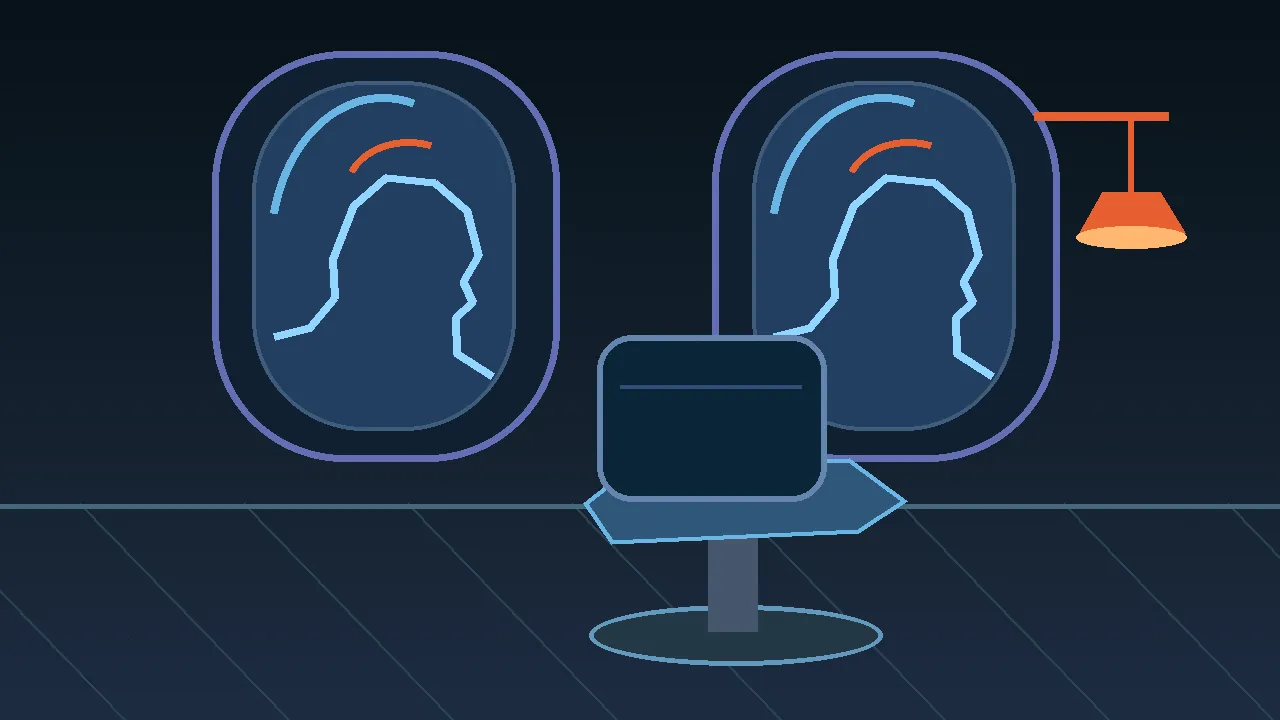
The customer is seated with their hair in a shape they have had for a long time. They are interested in a small change of length and want to keep the turn near the crown. The outline can be hard to see in the first mirror. It may become clear after the barber turns the chair a little. Keep the Turn at the Crown is a prototype about preserving one feature as the rest of the drawing changes.
Keep the requested feature in view
Begin with a drawing from behind the chair. A light outline shows the upper part of the profile and a written label identifies the turn. The customer can say that this is the part they want to retain. Select one proposed length while keeping that choice in the record. The new line appears inside the same profile. A second view shows how it looks when the chair returns to the front.
Try the short and longer proposals in sequence. A shorter profile can put the turn near the top edge of the drawing. A longer one can make the same shape appear farther from the mirror frame. The comparison retains the crown marker and the selected length in both views. The customer has room to check whether they can still identify the part they wanted to keep.
Let the confirmation refer to an actual picture
In an early version the customer responded after the player chose a length, while the illustration changed at the same time. We can separate those events. Show the new outline, leave the previous one within reach and give the customer a clear place to confirm. Their reply can name one visibly familiar part of the profile. It can also leave one part of the choice open if the later view still needs to be checked.
In a replay, you can see which proposal the reply refers to. The picture can sit next to a compact summary of what was chosen. On narrow screens the summary follows the view instead of obscuring the same corner of the image. The user can return to the previous proposal while the chair remains at the same angle.
Give the most useful shape a stable outline
The art uses dark blue behind the seated figure and thin cyan lines for the available outline. A terracotta mark sits near the current comparison. Its written label gives the same information when the shape is small. The cape and the mirror edge are drawn beside the profile so the reader can tell how the chair’s position affects what they can see. A static presentation preserves the same room and choices.
This is a concept about a fictional photographer’s visit to a barbershop in a game. The site describes the comparison and character response rather than real styling advice. The Line in the Second Mirror begins with a different feature near the lower edge of the profile. Both are in the Style Folio.
The quiet test uses the same reference strand in both proposals, even when the pose changes.